Which Is Better for Your Next Track, a J-pop Type Beat or a K-pop Type Beat
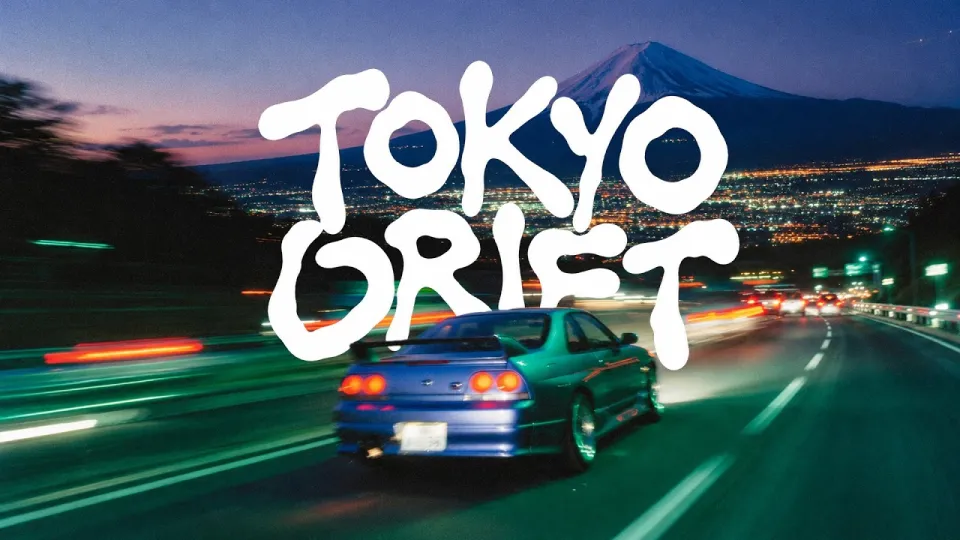
· based on the channel Kontrabandz
Key takeaways
- Kontrabandz released "TOKYO DRIFT" as a free J-pop x K-pop type beat on October 23, 2026.
- The beat is free for non-profitable use on YouTube and SoundCloud only; streaming releases require a purchased license.
- The producer's store offers a Buy 1 Get 9 Free bundle on the same page as the beat.
- J-pop type beats typically sit between 120 and 140 BPM with bright major-key chords, while K-pop type beats lean on 100–120 BPM with rap-ready sections.
- Licensing contact and catalogue links are handled through thekontrabandz.com and Instagram @thekontrabandz.
A J-pop type beat is the better pick when you want bright, guitar-led major-key energy with a fast melodic topline, while a K-pop type beat wins when your song needs tempo changes, a rap verse and a big choreography-ready chorus. The free "TOKYO DRIFT" beat from producer Kontrabandz deliberately sits in both camps, so you can test one instrumental against two different writing approaches before committing. You can grab it through the Kontrabandz store page with the Buy 1 Get 9 Free bundle.
What a J-pop type beat actually sounds like
J-pop type beats borrow the arrangement logic of Japanese pop: a clean intro, a guitar or piano hook stated in the first eight bars, and a chorus that arrives early and repeats. Tempos commonly land between 120 and 140 BPM, and the harmony usually stays in a major key with borrowed chords for lift rather than darkness. Melodies are dense — vocal lines often move in eighth and sixteenth notes, which is why J-pop toplines can sound busier than Western pop toplines over the same chord loop.
Production details that mark the style out:
- Bright, slightly compressed drum buses with a snappy snare rather than a heavy trap kick.
- Guitar or electric piano carrying the main motif, doubled by a bell or pluck synth.
- Chord progressions such as IV–V–iii–vi that keep the mood optimistic.
- A pre-chorus that strips the drums for two bars before the drop.
If your reference playlist is anime openings, city pop revival records or J-rock-adjacent pop, this is the template you are writing into.
What separates a K-pop type beat from it
A K-pop type beat is built for a group, not a single voice, and that changes everything about the structure. You expect a rap section, a pre-chorus that builds tension, a chorus that is often chant-like or hook-heavy, and frequently a beat switch or a bridge that drops to half-time. Tempos are wider, roughly 100 to 120 BPM for rap-led tracks and up to 130 for dance-pop, and the harmony can go minor without losing energy.
Arrangement markers of the K-pop approach:
- A distinct verse pocket with space for fast Korean or English rap.
- Layered group vocals on the chorus rather than one lead line.
- Sound effects and vocal chops used as percussion.
- A dance break or instrumental breakdown before the final chorus.
A K-pop type beat therefore asks more of the arrangement and less of the topline density: you write a hook, then you write a second hook for the dance break.
How "TOKYO DRIFT" bridges both styles
"TOKYO DRIFT" is marketed as a J-pop type beat crossed with a K-pop type beat, and that hybrid is the most useful thing about it. Instead of choosing one template, you get an instrumental whose melodic writing suits a J-pop-style busy topline while its sectioning leaves room for a K-pop rap verse. That makes it a low-risk test: write the same 16 bars twice, once with a J-pop approach and once with a K-pop approach, and hear which one your voice actually fits.
Practical ways to use one beat for both:
- Write a J-pop version with a continuous melodic verse and a doubled chorus hook.
- Write a K-pop version that keeps the verse rhythmic and saves the melody for the pre-chorus.
- Compare which version survives a phone speaker test — K-pop arrangements usually win there because the low end is simpler.
- Keep the better version and pitch the other as a demo or a SoundCloud drop.
Licensing and cost, in plain terms
Free type beats are free only inside the limits the producer sets, and Kontrabandz states them clearly: non-profitable use on YouTube and SoundCloud is allowed, while uploading to streaming platforms is forbidden without purchasing a license. That distinction matters because a song that performs well on Spotify or Apple Music without a cleared beat can be taken down, and the takedown usually arrives after the track has started earning.
What to check before you publish:
- Whether your release is monetised at all — ad revenue counts as profit.
- Whether distribution to Spotify, Apple Music or TikTok commercial sounds is planned.
- Whether the license you buy covers one beat or a bundle; the store page at the time of release offered Buy 1 Get 9 Free.
- Whether you need stems and tracked-out files for mixing.
For anything beyond a free upload, email thekontrabandz@gmail.com or use the site to confirm terms in writing before release day.
Where to find the beat, the catalogue and the producer
All official links for this release and the wider catalogue are listed below, copied from the video description. The first link is the purchase page for "TOKYO DRIFT" and the bundle offer; the rest lead to the producer's site, socials and curated playlists.
- Purchase and bundle: https://bsta.rs/aD6nId
- Official website: https://thekontrabandz.com
- Instagram: https://www.instagram.com/thekontrabandz/
- New Beats playlist: https://bsta.rs/5926b893a
- Billboard Hits playlist: https://bsta.rs/TZ4i5
- Contact email: thekontrabandz@gmail.com
The verdict on choosing between the two
Pick the J-pop type beat when your strength is melody and you want a fast, bright, guitar-driven backdrop that keeps the listener hooked from bar one. Pick the K-pop type beat when your strength is arrangement — rap verses, group-style choruses, beat switches — and you want a track built for performance. If you are unsure, a hybrid like "TOKYO DRIFT" lets you audition both directions on one instrumental, and the licensing terms are simple enough to test before you spend anything. The video breakdown of this beat comes from the channel Kontrabandz, whose catalogue covers pop, guitar, club and artist-specific type beats. When you are ready to release, start at the Kontrabandz purchase page for "TOKYO DRIFT" and confirm your license first.
Questions & answers
Is a J-pop type beat the same as a K-pop type beat?
No. J-pop type beats usually favour bright major-key harmony, dense melodic toplines and tempos around 120–140 BPM. K-pop type beats are structured for groups, with rap verses, chant-like choruses and beat switches, and often sit between 100 and 130 BPM.
Can I release a song on "TOKYO DRIFT" on Spotify for free?
Not without a license. Kontrabandz allows free, non-profitable uploads on YouTube and SoundCloud only, and states that streaming platform uploads are forbidden without a purchased license. Buy a license or confirm terms by email before distributing.
What does the Buy 1 Get 9 Free offer include?
The offer appears on the purchase page linked in the video description, where buying one beat grants nine additional free beats. Check the page for the current selection and confirm which files, such as stems, come with your order.
How do I write a K-pop style verse over a J-pop type beat?
Keep the verse rhythmic and leave the melody for the pre-chorus, then layer a group-style hook on the chorus. Use the beat's instrumental sections for a short dance break so the arrangement reads as K-pop rather than a straight pop song.
Source: [FREE] Jpop Type Beat x Kpop Type Beat - "TOKYO DRIFT" · Markdown version